

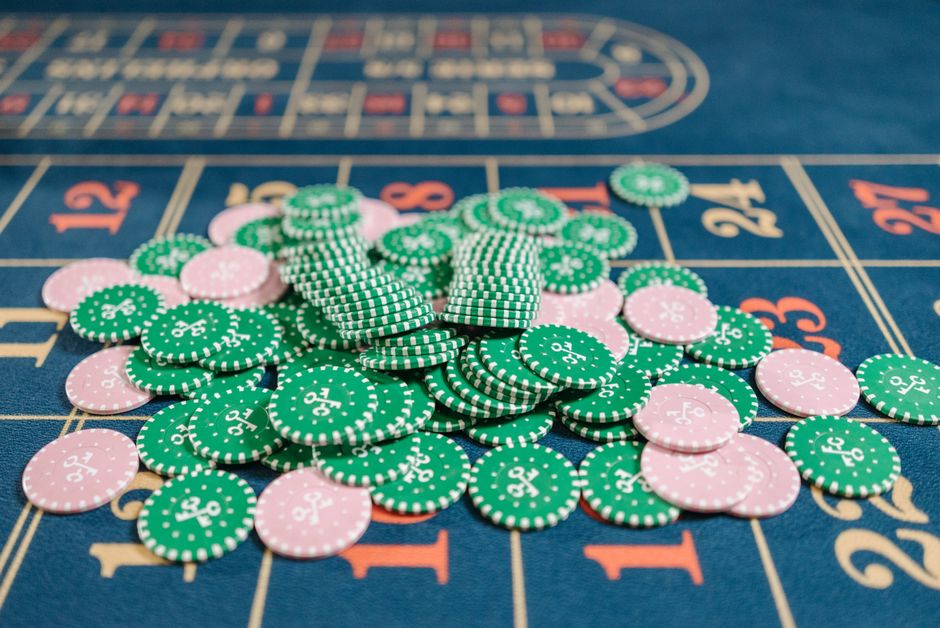
Ten years ago, if you told a Las Vegas pit boss that the future of casino gaming would be decided by a software engineer in Malta and a payment processor in Estonia, he would have laughed in your face. Today, that engineer and that processor have more influence over the global betting market than most brick-and-mortar casinos ever did. iGaming — the umbrella term covering online slots, poker, sports betting, live dealer tables, and everything in between — has quietly grown into a sector worth hundreds of billions of dollars annually. And the fascinating part isn't the money. It's how the games themselves have changed, and what players actually care about in 2025.
From Slot Machines to Slot Ecosystems
The humble slot machine has come a long way from the Liberty Bell that Charles Fey built in 1895. Walk into any online casino today and you'll find tens of thousands of titles, each with its own math model, volatility profile, and bonus mechanic. Providers like NetEnt, Pragmatic Play, and Play'n GO release new slots weekly, and the competition is fierce.
What separates a great slot from a forgettable one isn't the theme — pirate slots and fruit slots are a dime a dozen. It's the math. Every slot has an RTP (return to player) percentage, typically between 94% and 97%, and a volatility rating that determines how often and how hard it pays. A low-volatility slot like Starburst pays small amounts frequently. A high-volatility monster like Book of Dead or Money Train 3 might go 300 spins without a win, then dump 5,000x your stake on a single bonus round.
Smart players choose slots the way day traders choose stocks — by understanding variance, bankroll, and time horizon. If you have 50 euros and an evening, a high-volatility slot will likely eat you alive. If you have 500 euros and patience, that same slot becomes a legitimate shot at a life-changing hit.
What Actually Matters in a Slot
- RTP vs. volatility: High RTP doesn't mean low risk. A 96% RTP slot with extreme volatility can still crush a short session.
- Max win cap: A 10,000x cap sounds huge until you realize some slots offer 100,000x with the same bet.
- Bonus buy cost: Buying free spins usually costs 50–100x your stake. It's a shortcut, not a discount.
- Provider track record: Some studios are known for tighter math than others. Do a little homework.
Poker: Still the Thinking Player's Game
Poker has changed more than any other discipline in iGaming. In 2005, a smart amateur could sit at a $2/$5 table on PartyPoker and grind a modest living against recreational players who'd watched too much late-night ESPN. Today, even micro-stakes online games are populated by solvers, GTO wizards, and HUD-assisted grinders.
That's not a reason to quit. It's a reason to be honest about where the easy money still lives. Live poker rooms — particularly in Europe and parts of Asia — remain softer than online equivalents by a wide margin. Online tournaments with large fields and fast structures still reward aggression and ICM awareness more than pure technical precision. And mixed games like Omaha Hi-Lo, Stud, and 2-7 Triple Draw are chronically under-studied by the newest generation of players. For more on this, see SAO789.
If you're serious about poker in 2025, here's a short list of what actually moves the needle: SAO 789 goes into the finer points.
- Master preflop ranges before anything else. You cannot outplay a leaky preflop strategy.
- Track every session. Win rate without sample size is just storytelling.
- Study one format deeply — cash, MTT, or SNG — instead of dabbling in all three.
- Use solvers to check your intuition, not to replace it.
- Protect your mental game. Tilt costs more money than bad beats.
Live Dealer, Crash Games and the New Hybrids
When Evolution Gaming launched its first live dealer roulette stream in 2006, the quality was laughable — fuzzy video, awkward croupiers, constant buffering. Two decades later, live dealer is arguably the fastest-growing vertical in online casinos. Lightning Roulette, Crazy Time, and Mega Ball have pulled in hundreds of millions of bets, and studios are now pumping out hybrid formats that blend live hosts, RNG multipliers, and game-show theatrics.
Then there's the crash game phenomenon. Titles like Aviator, Crash, and Spaceman have exploded in popularity because they're brutally simple: a multiplier climbs, you cash out before it crashes. The house edge sits around 1–3%, and the psychological pull is enormous. Crash games are the closest thing iGaming has to a pure adrenaline product — and regulators have noticed.
Meanwhile, the line between sports betting and casino is disappearing. Same-game parlays, player prop markets, and in-play micro-bets have transformed betting apps into perpetual-motion machines. You can now bet on the next corner kick, the next free throw, or whether a specific player will get a yellow card. The granularity is extraordinary — and so is the risk to undisciplined bankrolls.
A Few Honest Truths About the Industry
Working as a writer in iGaming for years has taught me that the industry is neither the villain regulators sometimes describe nor the harmless entertainment some operators pretend it is. It sits somewhere in between, and the honest players know it.
A few realities worth stating plainly:
- Bonuses are not free money. Wagering requirements of 35x or 40x mean most players never convert a bonus into a withdrawable balance.
- RNG games are rigorously tested, but not generous. The house always has an edge, and it's baked into the math.
- Licensing matters. A UK, Malta, or MGA license means real oversight. A Curacao license with no displayed address means buyer beware.
- Payment processing is the real battleground. How fast a casino pays out tells you more about its integrity than any welcome offer.
- Responsible gambling tooling has improved — deposit limits, session timers, self-exclusion — and using it isn't weakness; it's maturity.
Where This Is All Heading
The next five years will be defined by three forces: regulation, personalization, and AI. Regulators in the US, Brazil, and parts of Asia are tightening rules, which will squeeze out the sketchiest operators and push the survivors toward higher standards. Personalization will mean that two players opening the same casino will see radically different bonus offers based on their play style — something affiliates and CRM teams are already prototyping. And AI will reshape everything from fraud detection to slot design, possibly rendering the old five-reel template obsolete.
For players, the practical advice hasn't really changed. Know the math. Set limits before you log in. Choose licensed operators, and treat bonuses as marketing rather than free money. Whether you're spinning reels, grinding tournaments, or sweating a three-leg parlay, discipline separates the people who enjoy iGaming for years from the ones who burn out in a weekend.
The games will keep getting slicker. The technology will keep getting smarter. But the fundamentals — bankroll, patience, and knowing when to walk away — remain exactly what they've always been. That's the part no software update will ever fix for you.






John Doe
14 January, 2022Having no content in post should have adverse..
Chauffina Carr
10 April, 2022We use these tests all time! Killer stuff!
Jim Séchen
16 July, 2022Thanks for all the comments, everyone!